Tank vs. Tankless Water Heaters: The 2026 Homeowner’s Guide to Efficiency & Performance

Choosing a water heater used to be a simple choice between brands. Today, it’s a choice between fundamentally different technologies: Standard Gas/Electric Tanks, Hybrid Heat Pumps, and High-Efficiency Tankless systems.

For a modern household, this decision impacts your monthly budget, your home’s resale value, and your daily comfort. There is nothing more frustrating than a relaxing steam shower turning into a “surprise polar plunge” because a traditional tank ran dry.
 

Quick Summary: 2026 Water Heater Comparison

  • Best for Endless Comfort: Navien NPE-240A2 Tankless (Gas).
  • Best for Budget Upfront: Electric Tank (High operating costs).
  • Best for  Efficiency: Hybrid Heat Pump (Requires massive space).
  • Installation Time: 4–8 hours for most professional retrofits.


The Landscape: Gas, Electric, Heat Pump, and Tankless

To make an informed choice, you must understand how these systems differ in their “Fuel-to-Shower” efficiency.

1. Traditional Gas & Electric Tank Heaters

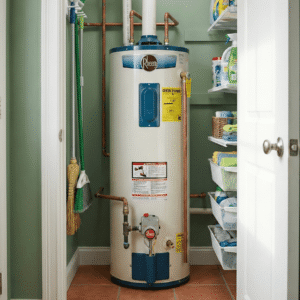
These are the units most of us grew up with. They store 40–60 gallons of water in a large, insulated cylinder.

  • The Flaw: They suffer from standby heat loss. Whether you are at work or on vacation, these units kick on periodically to keep that big tank hot.
  • Electric Tanks: These are often the most expensive to operate monthly, as heating water with electric resistance coils is energy-intensive.
  • Gas Tanks: More efficient than electric, but they lose significant heat through the exhaust flue.


2. Hybrid Heat Pump Water Heaters (The New Electric Standard)

Heat pumps don’t “create” heat; they “move” it from the surrounding air into the water.

  • The Pros: Highly efficient in warm climates and excellent for reducing carbon footprints.
  • The Cons: They are massive (often taller/wider than standard tanks) and require significant air volume to function. They also act as air conditioners—dehumidifying and cooling the room they are in, which can be a downside in cold Tennessee winters.


3. Gas Tankless: The Performance King (Navien NPE-240A2)

A tankless system, specifically a condensing gas model like the Navien NPE-240A2, only heats water when a faucet is opened. It uses a highly efficient heat exchanger to flash-heat water to your desired temperature instantly.


Comparison Table: How They Stack Up

Feature

Electric Tank

Gas Tank

Hybrid Heat Pump

Navien Tankless (NPE-240A2)

Energy Source

Electricity

Natural Gas/Propane

Electricity + Air

Natural Gas/Propane

Efficiency (UEF)

~0.90–0.93

~0.60–0.70

Up to 3.5+

0.96 (Ultra-High)

Hot Water Supply

Limited

Limited

Slow Recovery

Endless

Physical Size

Large

Large

Huge (Tall/Bulky)

Compact (Wall-Mount)

Lifespan

8–10 Years

8–12 Years

10–13 Years

20+ Years


Why “Recovery Time” is the Hidden Enemy

In a standard tank or heat pump system, “Recovery Time” is the interval you must wait for the tank to reheat after all the hot water is used. 

  • Standard Tanks can take 40–60 minutes to recover.
  • Heat Pumps in “Efficiency Mode” can take even longer.
  • The Navien Advantage: There is zero recovery time. Because it is an on-demand system, the 5th person to shower gets the same temperature as the 1st.


Solving the “Cold Water Sandwich” and “The Wait”

One common critique of older tankless units was the “Cold Water Sandwich”—a brief burst of cold water if you turned the shower off and back on quickly.

The Navien NPE-240A2 has effectively ended this debate with ComfortFlow® technology. By incorporating a small internal buffer tank and an integrated recirculation pump, the Navien maintains a steady loop of hot water. This ensures:

  1. Endless Hot Water: Once you get hot water – it doesn’t stop. 
  2. Steady Temps: No fluctuations when other appliances start.


Common Myths vs. Reality

Myth: “Heat pumps are always the cheapest to run.”

Reality: While heat pumps are efficient, they often struggle in high-demand households. If the heat pump can’t keep up, it switches to “Electric Resistance” mode, which is the most expensive way to heat water. A gas tankless system like the NPE-240A2 provides a more consistent, cost-effective performance for large families.

Myth: “Tankless installation requires tearing out my walls.”

Reality: The NPE-2 series is designed for “Easy Retrofit.” It can often use your home’s existing 1/2″ gas line in many cases. This eliminates the need for expensive gas line upgrades that older tankless models required.


Strategic Recommendation: Why We Choose Navien

The Navien NPE-240A2 is our top recommendation for Columbia homeowners for three reasons:

  1. Dual Stainless Steel Heat Exchangers: Most competitors use copper. Stainless steel is far more resistant to the minerals and “hard water” often found in Tennessee, leading to a much longer lifespan.
  2. Highest Efficiency: With a .95 UEF, 95 cents of every dollar goes directly into heating your water. Compare that to a traditional gas tank, where 30–40 cents of every dollar literally goes up the chimney.
  3. Space Savings: You can reclaim 10–15 square feet of floor space. In a modern home, that’s extra room for a pantry, storage, or a cleaner-looking utility room.


Maintenance: The Proactive Approach

To keep a 20-year unit running for 20 years, you must treat it like a car.

  • Tanks: Require “flushing” to remove sediment that settles at the bottom and corrodes the lining.
  • Tankless: Requires an annual descaling (flush) to keep the heat exchangers clear of scale buildup.
  • Heat Pumps: Require filter cleaning to ensure air can move through the heat pump evaporator.

Nullam quis risus eget urna mollis ornare vel eu leo. Aenean lacinia bibendum nulla sed